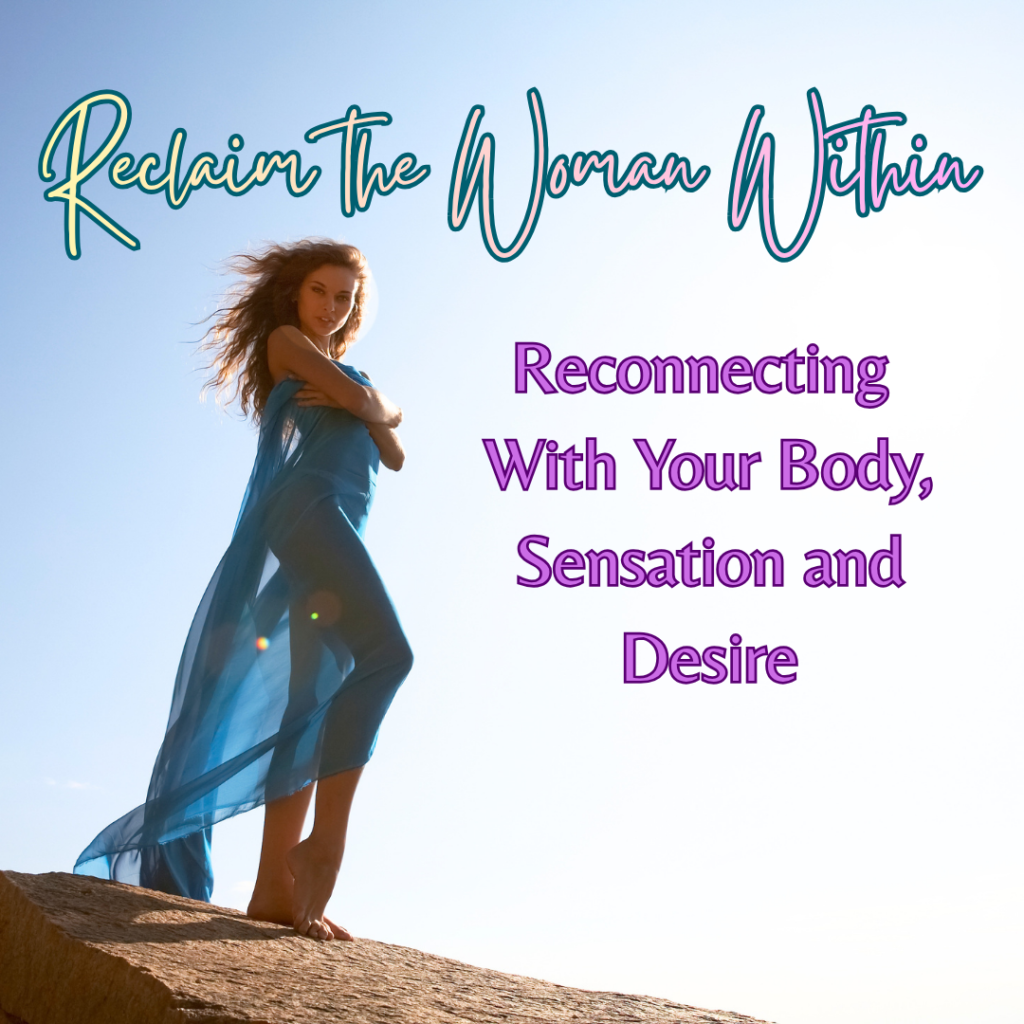
What happens when the roles we play—mother, partner, caregiver, professional—begin to eclipse the woman within? This exploration of embodiment, shadow work, sisterhood, Tantra, sensuality, pleasure and desire offers a pathway back to your body, your life force and the parts of yourself that may have gone quiet.
Have you ever had one of those moments when you suddenly think:
Where did I go?
Not necessarily in a dramatic, I’ve completely lost myself kind of way.
More like a quiet realisation that some of the things that once made you feel like you have become harder to find.
Maybe you’ve become a mother. A partner. The dependable one. The one who holds everything together. Maybe work, family, caring for others or simply the busyness of life has gradually taken up more and more space.
And somewhere along the way, some of the other parts of you have become quieter.
They’re still there.
But perhaps you’ve become so accustomed to being who everyone else needs you to be that you’ve stopped asking:
What do I need?
What do I want?
What makes me feel alive?
These are some of the questions I explore in Episode 16 of Contain Her Magic, Reclaiming the Woman Within—a two-part conversation with Cat, founder of Divine Mama Rising, that explores the concept of empleasurement (the meeting place of empowerment and pleasure) through her personal healing journey and her work with sacred women’s circles and yoni massage.
Reclaiming ourselves often begins with noticing what we’ve lost touch with in the first place- and sometimes that means reconnecting with our most unspoken and intimate parts.
When the roles become the identity
Let’s be clear: our roles aren’t the problem.
Motherhood isn’t the problem.
Partnership isn’t the problem.
Caring for people isn’t the problem.
The problem is when the role becomes the whole woman.
And it can happen over time without us really noticing.
You stop wearing the clothes you love because they’re impractical.
You put your creative projects on hold.
You see your friends less.
You don’t dance as much.
You become very good at being sensible, responsible, available and useful.
None of these decisions seems particularly significant on its own.
But add enough of them together and something shifts.
The little things that once made you feel like yourself begin to disappear.
And one day you realise you’ve become incredibly good at managing your life—and you’re not entirely sure how much you’re actually living it.
Cat decscribes this as, ‘an eclipsing of the self’.
This doesn’t mean you need to throw away your responsibilities or abandon the people you love.
It means asking whether there is still room inside the life you’ve created for all of you.
What have you put in the shadows?
There are also the parts of ourselves we’ve learned we’re not supposed to be.
Too loud.
Too sexual.
Too ambitious.
Too emotional.
Too wild.
Too much.
We learn the rules pretty early. There are acceptable ways to be a woman—and then there are the other ways. The ones that make people raise an eyebrow.
And sometimes another woman can bring those hidden parts right to the surface.
Perhaps she’s incredibly free and expressive.
Perhaps she’s comfortable with her sexuality.
Perhaps she takes up space without apologising.
Perhaps she has the courage to do something you’ve always secretly wanted to do.
And you find yourself irritated by her.
Or fascinated by her.
Or jealous.
What if, instead of immediately judging that reaction, you became curious about it?
What is she expressing that I haven’t given myself permission to express?
You don’t have to become her. You don’t even have to agree with her choices.
But she may be showing you something about yourself.
This is where shadow work gets interesting.
It isn’t about digging around in your psyche looking for everything that’s wrong with you. It’s about becoming curious about the parts you’ve learned to suppress, reduce or hide.
What have you decided isn’t acceptable?
What have you given yourself less permission to explore?
And what might happen if, instead of shaming that part of yourself, you actually listened to it?
Hey, Sister! You’re not Alone
There are some things that are easier to see when another woman reflects them back to us.
That’s one of the gifts of sacred women’s circles.
And they come in many forms. From Shakti circles and covens to women’s crafting circles, creative gatherings and informal groups of friends, women have always found ways to come together, share experiences and create community.
There’s something powerful about sitting with other women without needing to perform competence or have everything figured out.
You can say:
This is where I am.
This is what I’m struggling with.
This is what I want.
This is what I’m afraid to admit.
And someone else says:
Me too.
There is something deeply human about being witnessed without being fixed.
No performance.
No competition.
No need to have the perfect answer.
Just women listening, sharing, laughing, crying and sometimes saying the thing they’ve been too polite to say.
We recognise ourselves in one another.
And sometimes another woman helps us remember a part of ourselves we’ve forgotten.
Her honesty gives us permission to be honest.
Her courage gives us courage.
Her story reminds us that we aren’t the only one.
Whether you physically gather together or link up online, there is something powerful about creating a real space where women can simply be with one another.
Your body knows things your mind doesn’t
And eventually, this work moves beyond the mind.
Because you can understand yourself intellectually and still feel completely disconnected from your body.
How often are we taught to experience our bodies from the outside?
How do I look?
Am I attractive enough?
Thin enough?
Young enough?
Sexy enough?
What does everyone else think?
But what about:
How does it actually feel to be me?
Can you feel your feet on the floor?
Your breath moving through you?
Warmth?
Tension?
Softness?
A desire to move?
A place that feels alive?
There is a difference between knowing something about yourself and actually feeling yourself.
And this is where embodiment becomes important.
Coming back into the body doesn’t necessarily require some elaborate practice. It can begin with noticing.
Slowing down enough to feel the warmth of your tea.
Listening to the music instead of having it on in the background.
Feeling your body move.
Actually tasting your food.
Noticing what feels good.
Noticing what doesn’t.
The body is giving us information all the time. We don’t always stop long enough to listen.
Focus on a part of your body that needs some TLC and ask,
‘What do you have to say to me?’
Tantra: weaving yourself back into life
This is also where Tantra becomes interesting.
Tantra is often reduced in the West to sex and sexuality, but the understanding explored in this conversation is much broader. The word itself relates to the idea of weaving—expanding awareness and weaving ourselves more deeply into the experience of life.
It’s about presence.
The senses.
Breath.
Sound.
Awareness.
Feeling.
And that can be surprisingly ordinary.
Savouring the moment.
A delicious meal.
Beautiful surroundings.
Getting dressed for a date rather than simply showing up at the end of a long day.
Lighting candles.
Putting on perfume.
Making eye contact.
Actually being there for the experience rather than rushing through it.
There is something quite radical about that kind of attention when you’re used to moving quickly from one thing to the next.
You don’t necessarily need to add more to your life.
Sometimes you need to experience more of the life you’re already living.
Kundalini, life force and the return of sensation
This brings us to Kundalini and the idea of life-force energy.
Within the tantric framework explored in the episode, Kundalini is understood as sensual energy and life force moving through the body.
And when that energy becomes stifled, something can happen.
We can become numb.
Disconnected.
Less creative.
Less engaged with life.
The opposite can happen when we begin allowing ourselves to feel again.
Not forcing anything.
Not performing sensuality.
Not deciding that we should feel a certain way.
Simply becoming more available to sensation.
This is important because pleasure isn’t something women have to pursue in any particular way.
It’s a choice.
But having the capacity to feel pleasure—and giving ourselves permission to experience it without shame—can be part of reconnecting with our own vitality.
What if pleasure is part of the way back?
Let’s talk about pleasure.
Because women have been given some pretty complicated messages about it.
Pleasure can feel indulgent.
Selfish.
Unnecessary.
Or something that exists primarily for somebody else.
But pleasure isn’t just sex.
It’s sunlight on your skin.
A song that makes you move.
Beautiful fabric.
A bath.
A great meal.
Laughter.
Putting on something that makes you feel fabulous—even if nobody else sees it.
Dancing in the kitchen.
Taking the scenic route.
Closing your eyes and actually feeling the moment you’re in.
Pleasure asks us to receive the experience of being alive.
And for women who’ve spent years doing, giving, organising and caring for everyone else, receiving can be surprisingly radical.
You don’t have to earn it.
You don’t have to justify it.
You don’t have to make it productive.
You can simply enjoy something.
Imagine that.
And then there’s desire
When was the last time someone asked you:
What do you want?
Not what does everyone else need.
Not what’s realistic.
Not what’s practical.
Not what you’re supposed to want at this stage of your life.
What do you actually want?
Desire is bigger than sex.
It’s wanting.
Curiosity.
Aspiration.
Creativity.
That little spark of:
I want to try that.
I want to go there.
I want to make this.
I want to experience that.
I want more.
And maybe you’ve been so busy being grateful for what you have that you’ve forgotten you’re still allowed to want.
Desire can be a source of energy.
A direction.
A pulse.
A way of being engaged with life.
And when we reconnect with desire, it doesn’t necessarily stay contained within us.
It can change how we show up in our relationships and in our homes.
There’s a reason the saying “If Momma ain’t happy, ain’t nobody happy” has stuck around.
It’s usually said as a joke, but there’s something underneath it worth noticing.
When a woman is depleted and disconnected from herself, that energy can affect the atmosphere around her.
And the reverse can be true too.
When she has desire again, when she feels more alive, when she takes time to fill her own cup—not because it’s her job to keep everyone else happy, but because her life belongs to her—that energy can ripple outward.
Maybe she’s more playful with her children.
Maybe she dances in the kitchen while making dinner.
Maybe she brings a different energy into her relationship.
Maybe she simply feels more vibrant as she moves through an ordinary day.
Not because it’s her responsibility to make everyone else happy.
But because when you stop disappearing from your own life, people around you can feel the difference.
Your aliveness belongs in everyday life
And no, reclaiming yourself doesn’t need to become another bloody project.
You don’t need another list of things to fix about yourself.
Sometimes it looks ridiculously simple.
Wear the dress.
Put on the music.
Call the friend.
Take yourself somewhere beautiful.
Say yes.
Say no.
Make something.
Rest.
Dance while you’re cooking.
Buy the flowers.
Follow the curiosity.
Admit what you want.
Let yourself be seen.
These aren’t necessarily grand acts of transformation.
They’re small ways of making room.
And when we make room for more of ourselves, it can change the way we move through everything else.
We don’t have to abandon the people we love.
We don’t have to reject the roles that matter to us.
We simply stop allowing those roles to be the only story.
Reclaiming the woman within
Maybe the woman within isn’t lost at all.
Maybe she’s been waiting.
Waiting for you to become curious again.
Waiting for you to notice what you’ve pushed into the shadows.
Waiting for you to listen to your body.
Waiting for you to ask what you want.
Waiting for you to allow pleasure, desire, creativity, sensuality and joy to have a little more room.
Maybe reclamation isn’t about becoming some shiny new version of yourself.
Maybe it’s about taking back the pieces you’ve been leaving at the door.
Your voice.
Your body.
Your desire.
Your pleasure.
Your creativity.
Your wildness.
Your tenderness.
Your capacity to want.
Because you don’t need to become someone else.
You might just need to give yourself permission to be more fully you.
Keep exploring
This is the territory I explore in Episode 16 of Contain Her Magic: Reclaiming the Woman Within.
It’s a two-part conversation that moves from shadow work and sisterhood into sensuality, Tantra, Kundalini, pleasure, desire and embodiment.
 Listen to Part 1: Shadow, Sisterhood & Sensuality
Listen to Part 2: Pleasure, Desire & Feeling Fully Alive
And if you’re feeling the need to start a little closer to home, I’ve created something simple for that.
Five Minutes Just for You
Five minutes.
That’s it.
A simple practice to step out of the noise, reconnect with your body and reclaim a little joy.
No transformation plan. No homework. No becoming a better version of yourself.
Just five minutes that belong to you.
 Get your FREE Five Minutes Just for You practice.
Because sometimes reclaiming yourself starts with simply stopping long enough to remember that you’re here.
Join me on Sur YouTube à Embody Your Magic with Sonia— where I share grounded, mind-body practices and reflections to help you reconnect with your body, your truth, and the version of you that feels most aligned.
What part of yourself are you ready to reclaim?
I’d love to hear from you. 💖Share your thoughts, reflections or experiences in the comments below. Your words might be exactly what another woman needs to hear today. 